2 Introduction
2.1 Afrocanarian blue tits
When did the blue tits (genus Cyanistes) colonise the Canary Islands?
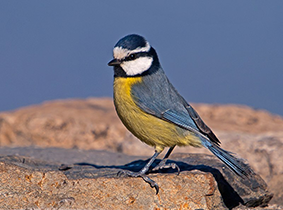
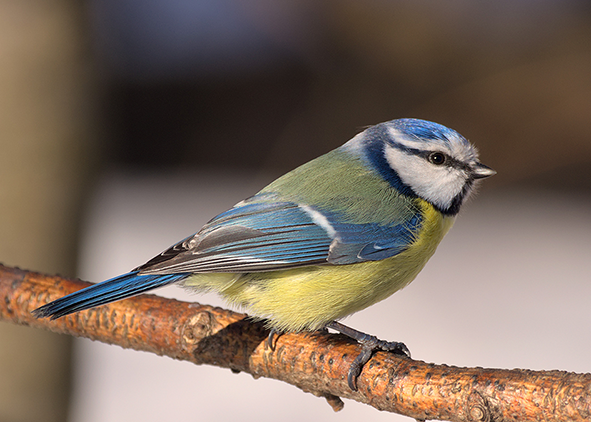
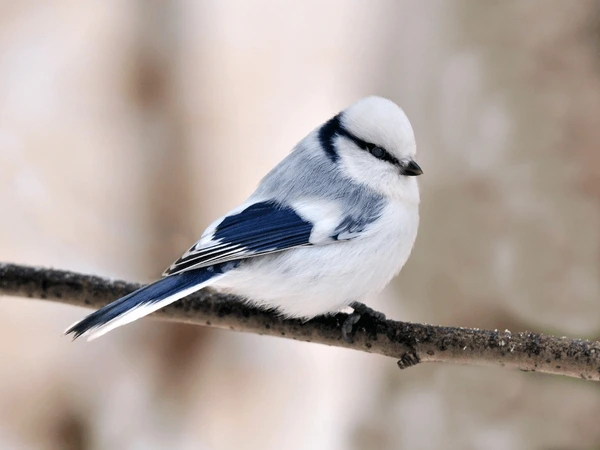
The Cyanistes caerulus/teneriffae species complex (blue tits) is a group of birds found in North Africa, Canary Islands and Eurasia (Stervander et al 2015, Molecular Ecology). Even though it has been widely studied for decades using morphological and molecular data, taxonomists still cannot agree on how many species there are! In particular, it remains unclear how many colonisation events have occurred to the Canary Islands, and how many distinct lineages occur in the Canary Islands.
In this practical we are going to infer how many colonisation events have occurred and estimate the time of colonisation of the Canary Islands by the ancestors of the extant Cyanistes lineages. To do this, we will reconstruct and date a phylogeny of genus Cyanistes, including multiple individuals of Cyanistes from all major lineages and regions of its geographical distribution. As an outgroup, we will use the closely related genus Parus. Then we will reconstruct ancestral areas along the phylogeny to determine number of island colonisations.
Finally, we will use the “splits” R package in R to apply the GMYC method (generalized mixed Yule coalescent) to optimize genetic clusters in our tree – in other words, we will try to identify and delimit how many species are contained in this tree.
In case you can’t run a certain step of this practical, there are back-up files available for every step (on Brightspace).